California Access to Justice Commission  |  Three Decades of Impact

Celebrating 30 Years of Access to Justice in California

19962026
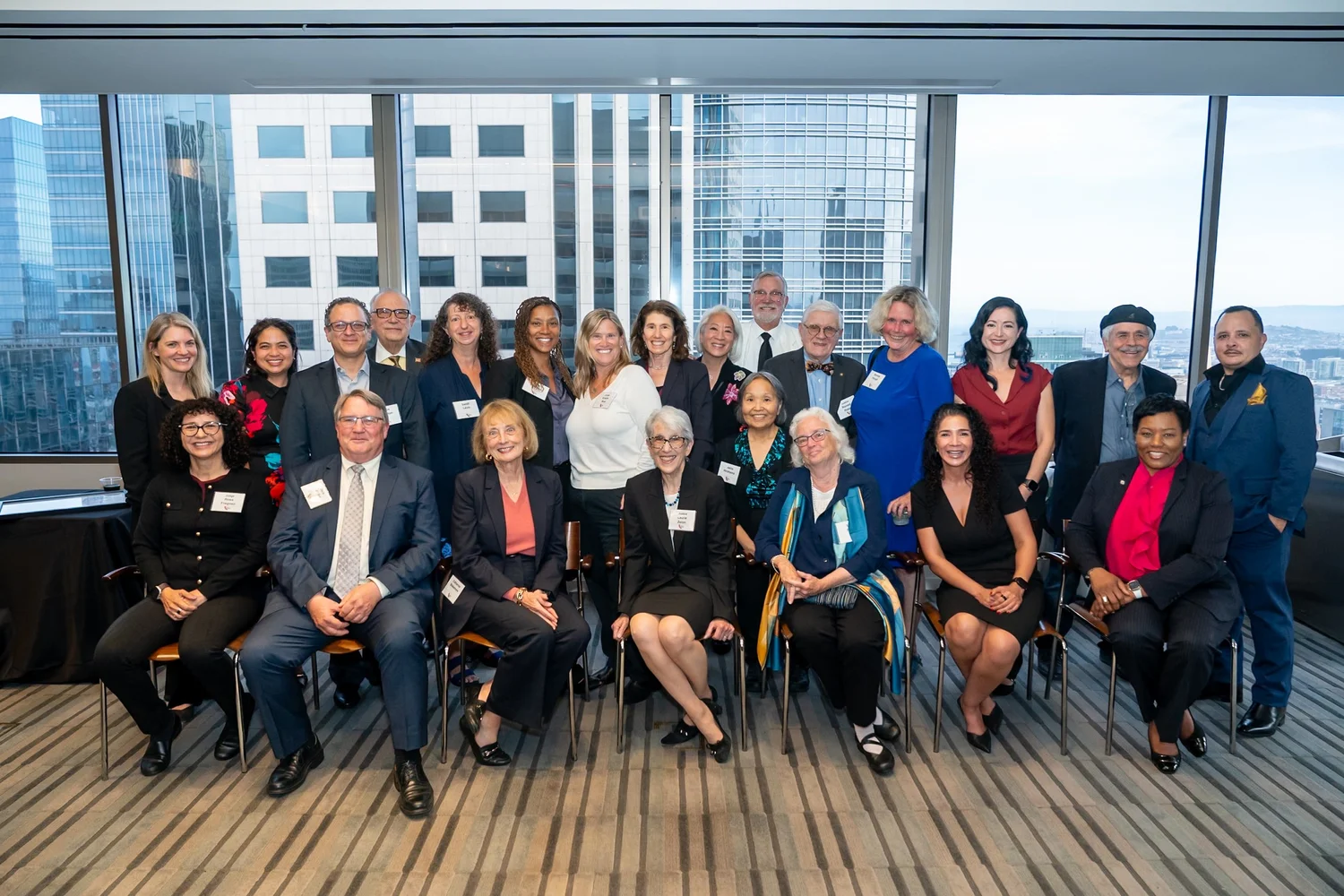
Commissioners and guests gathered for a group photo at the California Access to Justice Commission’s 30th Anniversary Celebration, September 2026

Our Mission

The California Access to Justice Commission advances access to justice for all Californians by expanding resources, removing barriers, and developing innovations so everyone can effectively and efficiently resolve their civil legal issues.

Thirty Years of Expanding Access to Justice

  1. 1996

    A Vision Takes Shape

    And Justice for All is published, leading to the creation of the California Access to Justice Commission.

  2. 1997

    Expanding Court-Based Self-Help Centers

    The Commission supports the statewide expansion of court-based self-help centers.

  3. 1999

    Equal Access Fund Established

    Chief Justice George, the Commission, LAAC, and the State Bar advocate successfully for the State to create the Equal Access Fund, establishing ongoing funding for legal aid.

  4. 2001

    Limited Scope Legal Assistance

    The Commission helps establish clear rules and guidelines for limited-scope representation, expanding access to affordable legal assistance.

  5. 2005

    Breaking Language Access Barriers

    The Commission publishes Language Barriers to Justice in California, helping pave the way for California’s Language Access Plan.

  6. 2009

    Advancing the Right to Counsel

    The Commission helps establish the Sargent Shriver Civil Counsel Act, expanding legal representation for low-income Californians.

  7. 2010

    Addressing Attorney Deserts

    A series of papers by the Commission’s Rural Access Committee analyzed causes and effects of the shortage of legal help in rural areas.

  8. 2013

    Supporting New Lawyers with Incubator Programs

    The Modest Means Incubator Project launches to help attorneys build sustainable practices serving moderate-income Californians.

  9. 2020

    Responding to a Pandemic with Remote Proceedings

    The Commission publishes statewide guidance to help courts conduct remote proceedings while preserving access to justice during COVID-19.

  10. 2021

    Infrastructure & Innovation Grants

    The Infrastructure & Innovation Grant Program launches, strengthening legal aid organizations serving immigrant, rural, and other underserved communities.

  11. 2023

    Supporting Attorneys with Loan Repayment Assistance Programs

    The Loan Repayment Assistance Program is established to help recruit and retain attorneys serving California’s legal aid community.

  12. 2024

    Access to the Record

    The Commission highlights gaps in access to court records and advances solutions including expanded court reporting and electronic recording.

Chapter 1

Expanding Resources

The California Access to Justice Commission has made access to legal representation for all Californians, regardless of income, a core priority since publication of And Justice for All, the 1996 report that led to its creation.

Equal Access Fund

Expanding access to legal representation has been a core priority of the California Access to Justice Commission since the publication of And Justice for All in 1996, the landmark report that led to the Commission’s creation.

The Commission played a critical role in developing and advocating for the Equal Access Fund (EAF), established in 1999 as a one-time $10 million allocation that has grown in the last decade as California’s dedicated source of ongoing state funding for civil legal aid. Since its creation, the Fund has provided more than $500 million to a statewide network of 115 local and statewide legal aid organizations.

These organizations help Californians facing eviction, child custody disputes, immigration matters, domestic violence, and other critical civil legal issues. The Fund also supports court-based services that assist people who must navigate the court system without an attorney, helping millions of Californians access justice more effectively.

The Commission was critical in creating the Equal Access Fund after additional restrictions had been placed on federal funding for legal aid in the mid-90s. Creating a dedicated state stream to serve low-income families has allowed legal aid organizations a lifeline when other, more volatile funding goes down. Because this funding has been stable for decades, advocates have been able to work with the legislature to increase EAF during times of crisis, whether it’s the COVID-19 pandemic, the housing crisis, or new threats to federal funding.

Salena Copeland, Executive Director of the Legal Aid Association of California

Infrastructure & Innovation Grants

Beginning in 2021, the Legislature increased the Equal Access Fund and designated a portion for Infrastructure and Innovation Grants administered by the California Access to Justice Commission. These grants help legal aid organizations strengthen their operations while using innovative strategies and expanding services to communities that have historically faced barriers to justice, particularly immigrant and rural communities.

To date, the Commission has awarded 281 grants totaling $29.3 million, with an additional $10 million in process. The program has helped organizations improve technology, expand staffing, develop new service models, and build the infrastructure needed to secure additional funding from other public and private sources.

Demand for these grants continues to far exceed available funding, underscoring the ongoing need for investment in California’s legal aid system.

The Legislature’s investment of $40 million over six years in Infrastructure and Innovation grants has proven to be a great investment in legal aid. These funds have made a long-term difference in legal aid’s ability to serve more clients, with greater efficiency and increased quality and helped them make far-reaching impact serving immigrants, rural Californians and other underserved communities.

Tiela Chalmers, CalATJ Grants Staff

Court-Based Self-Help Centers

Beginning in 1997, the Commission supported the Judicial Council, the Legislature, and other partners in establishing court self-help centers throughout California. By 2008, every county in the state had a self-help center—an unprecedented achievement that transformed access to the courts.

Today, self-help centers provide millions of Californians with court forms, instructional materials, workshops, educational videos, and one-on-one assistance. These services have become an essential resource for people navigating the civil justice system without legal representation.

The Access to Justice Commission provided invaluable assistance in obtaining the support of the bar for, what was then, a new role of self-help attorneys in the court. This innovation, of providing extensive legal information and practical assistance with forms and procedures to all persons, without requiring income, immigration or other screening, has now helped millions of Californians. Courts throughout the country have followed California’s lead in providing self-help centers as a critical part of the access to justice solution.

Bonnie Hough

Loan Repayment Assistance Program

California faces a persistent shortage of legal aid attorneys, with only one legal aid lawyer available for every 7,000 eligible Californians. Educational debt often discourages new attorneys from pursuing careers in public interest law.

Working with legislative and legal community partners, the Commission helped establish a tax-advantaged Loan Repayment Assistance Program beginning in 2023. Combined with the federal Public Service Loan Forgiveness program, it enables legal aid attorneys to pursue long-term public service careers while managing the financial burden of law school debt.

The Commission has made thousands of loan repayment distributions to California legal aid providers, strengthening recruitment and retention across the state’s legal aid community.

Student debt loan is a well-documented burden that prevents many law graduates, particularly those from traditionally underserved and low-income communities, from entering the public interest field. This dearth of attorneys entering the field only expands the justice gap at a moment in time when the need continues to expand. CalATJ’s LRAP is a game changer that will help more graduates enter the field and help bring service, and hope, to our clients and communities.

Diego Cartagena, Executive Director of Bet Tzedek

Chapter 2

Removing Barriers

The California Access to Justice Commission has worked with courts, policymakers, legal aid organizations, and community partners to identify barriers that prevent Californians from fully accessing the civil justice system and to develop practical solutions that make justice more accessible for everyone.

Language Access

For many Californians, language barriers make meaningful participation in court proceedings nearly impossible. Recognizing this challenge, the Commission published Language Barriers to Justice in California in 2005, a landmark report that helped focus statewide attention on the need for comprehensive language access.

Working alongside the Judicial Branch, the Legislature, and the legal community, the Commission supported the development and implementation of California’s Language Access Plan. These collaborative efforts transformed what once seemed an unattainable goal into a statewide commitment to equal access. Today, court users have increased access to translated forms, multilingual resources, and court interpreters in more than 200 languages, and support ongoing work to help ensure Californians can meaningfully participate in court regardless of the language they speak.

Unless every Californian can fully understand and participate in judicial proceedings affecting his or her legal rights, our courts cannot serve their intended purpose and our democracy cannot keep one of its most important promises.

Language Access Committee

Remote Proceedings

When the COVID-19 pandemic disrupted court operations in 2020, California courts faced the urgent challenge of continuing essential services while protecting public health. Within weeks, the Commission responded by researching best practices and publishing comprehensive guidance on conducting remote court proceedings while preserving access to justice.

The guide addressed critical issues including technology selection, public access, training for court personnel and users, and determining which proceedings could be conducted remotely without compromising fairness.

The California Judges Association distributed the guide to judges statewide, and the National Center for State Courts adopted it as a national resource, extending the Commission’s impact well beyond California.

“In many cases, appearing remotely reduces the fear of appearing in a courtroom, especially for cases involving domestic violence and elder abuse,” said Mendocino County Superior Court Judge Ann Moorman during a 2024 Judicial Council meeting. “Remote proceedings do, and can, reduce further traumatization for participants and the potential for conflict in the courtroom.”

Judge Ann C. Moorman, Superior Court of CA, Mendocino County

Attorney Deserts

Many Californians living in rural communities face significant barriers to obtaining legal assistance because few attorneys practice outside urban areas. Although approximately 58% of rural residents report experiencing at least one civil legal issue each year, only about 3% of California attorneys maintain offices in rural communities.

To better understand this challenge, the Commission studied the causes and consequences of attorney deserts and explored practical solutions to expand access to legal services. Its work highlighted opportunities to increase funding for rural legal aid, strengthen technology that connects urban attorneys with rural clients, expand community-based partnerships, and develop alternative service delivery models.

These recommendations continue to inform efforts to ensure geography does not determine whether Californians can obtain legal help.

[N]o two rural communities are the same and solutions must likewise be nuanced and locally relevant. With this in mind, bolstered by comprehensive data, and with an appreciation for our nation’s rural strengths and diversity, we can devise solutions to the rural access-to-justice crisis that are as varied, unique, and vibrant as the land and populations across which they must ultimately be deployed.

Professor Lisa R. Pruitt, UC Davis School of Law

Access to the Record

For many Californians, an official record of court proceedings is essential for understanding court decisions, preparing legal documents, and pursuing an appeal. Yet more than one million court hearings each year take place without an official record, creating significant barriers for people who cannot afford a private court reporter.

The Commission examined this growing access-to-justice issue and published recommendations to improve access to court records. These included expanding recruitment and retention of certified court reporters while increasing the use of electronic recording in appropriate proceedings when a court reporter is unavailable.

By highlighting both the human impact of missing court records and practical policy solutions, the Commission helped advance conversations about ensuring every Californian has meaningful access to the judicial process.

Without a record of their proceedings, Californians cannot truly protect their rights or gain meaningful access to justice. That access cannot be limited to those with sufficient assets to hire a private reporter to preserve their record. The Commission’s report provided critical information and analysis, leading to a landmark decision by the California Supreme Court protecting access to justice for all Californians.

Justice Laurie Zelon (Ret.), California’s Court of Appeal, 2nd District

Chapter 3

Developing Innovations

Meeting the legal needs of Californians requires innovation. Throughout its history, the California Access to Justice Commission has worked with courts, the legal profession, policymakers, and community organizations to develop new approaches that make legal services more affordable, more accessible, and better equipped to meet the changing needs of California’s diverse communities.

Limited Scope Legal Assistance

Many Californians need legal assistance but cannot afford full representation. The Commission’s 2001 Report and Recommendations helped change that by advancing limited-scope legal representation—often called “unbundling”—which allows attorneys and clients to agree that representation will be limited to specific tasks or stages of a case.

Before the Commission’s work, many attorneys believed limited-scope representation posed ethical or malpractice risks. Working with the State Bar and the courts, the Commission helped develop clear rules, guidelines, and best practices that established limited-scope representation as an appropriate and ethical way to deliver legal services.

Today, Californians have greater access to affordable legal advice and representation, while attorneys have greater flexibility to serve clients who otherwise might not be able to obtain legal assistance.

The Commission was instrumental in making limited scope a reality for both litigants and attorneys. Many litigants cannot afford to pay for full representation but are able to handle some legal issues with a little bit of attorney advice and guidance. Limited scope representation allowed many attorneys to build a strong practice, while providing mostly self-represented litigants with the legal assistance that they needed to confidently handle their case.

Judge Mark Juhas

Right to Counsel

Access to legal representation has long been central to the Commission’s mission. While the right to counsel is guaranteed in criminal cases, most civil litigants facing the loss of housing, personal safety, or child custody do not have the same protection.

Beginning in 2009, the Commission played an instrumental role in establishing and supporting the Sargent Shriver Civil Counsel Act, which created pilot programs providing full legal representation to low-income Californians in cases involving critical human needs. Evaluations of these programs demonstrated improved legal outcomes for tenants, increased negotiated settlements, and greater court efficiency.

The Commission has also supported local right-to-counsel initiatives, including landmark efforts in San Francisco and Los Angeles. Together, these initiatives continue to advance the principle that meaningful access to justice often requires meaningful access to legal representation.

We do not attempt to predict whether or when the courts will establish a comprehensive right to counsel for indigent civil litigants in this state. For other governmental institutions, and for the legal profession, the question is different. It is whether this state will only respond to constitutional directives, or whether sound public policy and common morality should be reason enough for the legislature and the bar to act.

Justice Earl Johnson, Jr. (Ret.), California’s Court of Appeal, 2nd District

Incubator Programs

In 2013, the Commission launched the Modest Means Incubator Project to connect practical training for newer attorneys with affordable legal services for Californians who earn too much to qualify for legal aid but cannot afford traditional legal representation.

The Commission’s research and guidance helped establish incubator programs that paired law schools, legal aid organizations, and practicing attorneys to support new lawyers as they developed sustainable practices serving moderate-income clients. The programs also encouraged innovation through technology, alternative fee arrangements, and new models of legal service delivery.

Several of the original incubators continue to operate today. An independent evaluation concluded that legal incubators not only attract diverse participants but also help address California’s justice gap by increasing the availability of affordable legal services.

Section 6068(h) of the Business & Professions Code says it is the duty of an attorney “Never to reject, for any consideration personal to himself or herself, the cause of the defenseless or the oppressed.” That aspiration should guide us today.

Justice Goodwin Liu, Supreme Court of California

2026 Access to Justice Impact Awards

Celebrating Our Honorees

Honoring Work in Innovation

Mobile Pathways

Recognized for advancing access to justice through innovative technology that helps immigrants and legal service organizations navigate an increasingly complex immigration system. With support from the Infrastructure and Innovation Grant Program, Mobile Pathways has developed scalable tools that turn government and court data into actionable information for advocates and immigrant communities.

LATINAN

Recognized for expanding access to justice for low-income immigrants, including people in remote communities and speakers of languages often underserved by legal systems. Its innovative work pairs culturally and linguistically responsive technology—including AI-assisted voice-to-text tools in Spanish, Mixteco, and Triqui—with direct legal advocacy.

Honoring Work in Immigration

California Collaborative for Immigrant Justice (CCIJ)

Recognized for building statewide capacity to protect immigrants who are detained or at risk of detention. CCIJ combines direct legal intervention with rapid-response systems, technical assistance, collaboration, and shared infrastructure to address barriers including detention, lack of counsel, geographic isolation, and urgent legal deadlines.

Oasis Legal Services

Recognized for expanding culturally responsive access to justice for LGBTQ+ immigrants, including people fleeing violence and persecution. Oasis combines direct representation, trusted community support, self-advocacy tools, pro bono strategies, and accessible legal information to help clients understand and protect their rights.

Honoring Work Serving Underserved Communities

Inner City Law Center (ICLC)

Recognized for strengthening access to justice for people experiencing homelessness and other low-income residents of Los Angeles. ICLC combines direct assistance, technology, and systems design to help people obtain vital documents and benefits, defend their housing, and navigate the justice system.

Legal Services for Seniors

Recognized for advancing access to justice for older adults in Monterey County by helping them protect their homes, safety, financial security, and independence. Its work combines public education and prevention with direct legal advocacy to protect seniors from scams, exploitation, and other threats to their rights.

Legislative Honorees

Recognized for advancing funding and policies that strengthen civil legal services and expand access to justice across California.

  • Senator Tom UmbergChair, Senate Judiciary Committee
  • Senator María Elena DurazoChair, Senate Budget Subcommittee No. 5
  • Assemblymember Ash KalraChair, Assembly Judiciary Committee

Legislative Staff Honorees

Recognized for their essential role in advancing funding and policies that expand civil legal justice in California.

  • Eric DangDeputy Policy Director, Office of the Senate President pro Tempore
  • Nora BrackbillConsultant, Senate Committee on Budget and Fiscal Review
  • Emelyn C. RodriguezGeneral Counsel to the Assembly Speaker
  • Jennifer KimConsultant, Assembly Committee on Budget
  • Nicholas LiedtkeChief Counsel, Assembly Judiciary Committee
  • Manuela BoucherDeputy Chief Counsel, Assembly Judiciary Committee

Thank You to Our Donors

Pillars of Justice

  • The Morrison & Foerster Foundation
  • Anonymous

Champions of Justice

  • Mary Flynn & Michael Flynn
  • Catherine Blakemore & Bill Wild

Advocates of Justice

  • The Wang Family Foundation

Friends of Justice

  • Justice James Lambden
  • Judge Tim Dillon
  • Thai Community Development Center
  • Judge Erica Yew
  • Justice Laurie Zelon & David George

Supporters of Justice

  • Justice Kelli Evans
  • Justice Gail Ruderman Feuer
  • Le & Ann Nguyen

Allies of Justice

  • Salena Copeland
  • Judge Rosa Fregoso
  • Leora Gershenzon
  • Mairi McKeever
  • Doan Nguyen
  • Jose R. Padilla
  • Justice Ronald B. Robie
  • Janice Schmidt
  • Bijan Taheri
  • Judge Monica F. Wiley

Looking ahead

For 30 years, the California Access to Justice Commission has worked to expand resources, remove barriers, and develop innovations that improve access to justice for all Californians. We are proud of what has been accomplished over the past three decades and look forward to continuing this work for generations to come.